
...
Policies in PDK version 2 are standards to which adherence can be asserted and that can be assessed and validated – for example as trust marks – and that are endorsed by AEGIS and considered ‘standards track’. Policies also are endorsed by the organisation at the appropriate level of management, and express a commitment of adherence by the organisation’s management. These are indicated in a roman font in the graphic below. The processes and procedures, being templates, are reference implementations where we assume these to be specialised for specific deployments. In the diagram these are indicated in italics.
| Scroll ImageMap | ||||||||||||||||||||
|---|---|---|---|---|---|---|---|---|---|---|---|---|---|---|---|---|---|---|---|---|
|
All templates and guidelines
...
Snctfi, operational policies, and AAI service providers
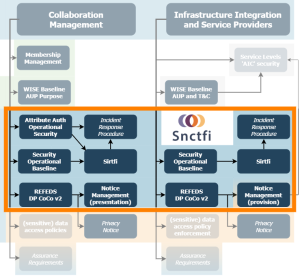 Smaller and mid-sized communities may opt to offload some of the more complex aspects of authentication and authorisation to dedicated AAI service providers. And if you operate your own AAI core components, both your users and resource providers may want to have some assurance about the trust and security posture of your AAI platform. The Snctfi suite is the set of assessable and verifiable policies and procedures in the PDK that AAI platform providers can use to make the trustworthiness of their systems transparent to users and relying parties alike.
Like Like Sirtfi for security incident response, Snctfi provides a self-assessment framework, but having this assessment peer reviewed brings several benefits. For one, it increases the trust others have in your platform and your assessment, making it easier for ‘as-a-service’ operators to engage with new collaborations and infrastructures. And it brings advantages to yourself as well, as you can compare notes with your peers and become better together through shared learning.
...