

Summary
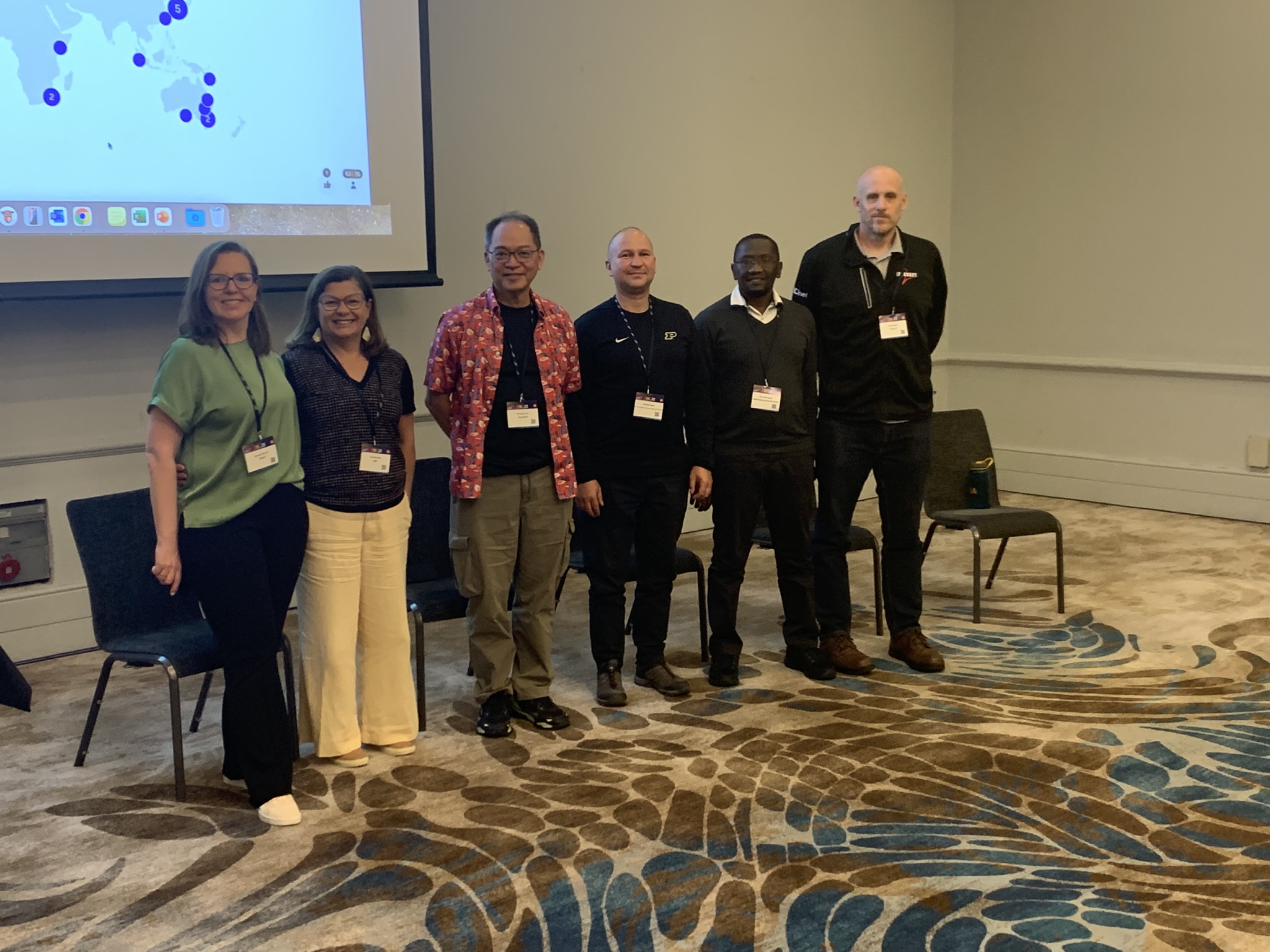
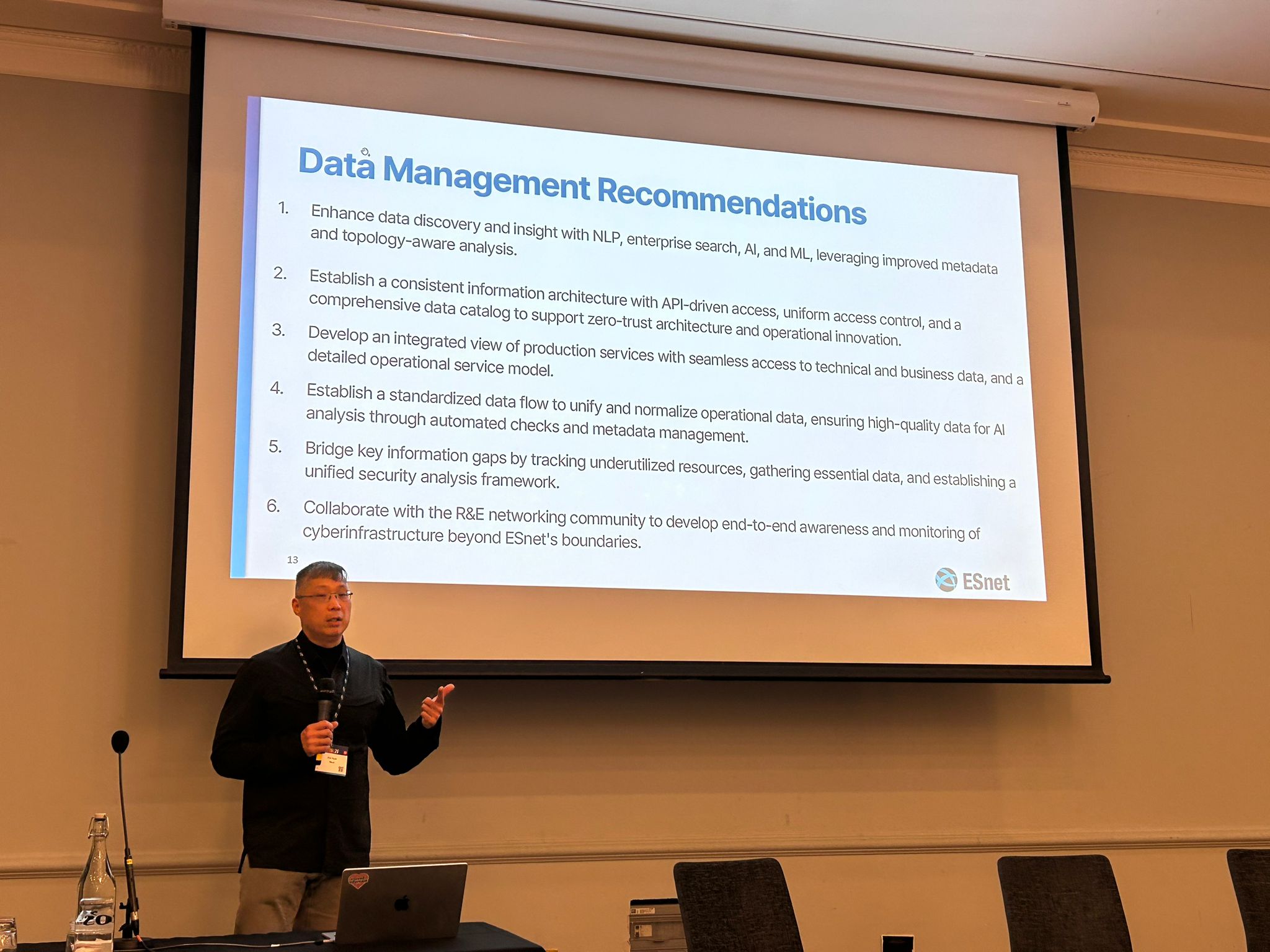
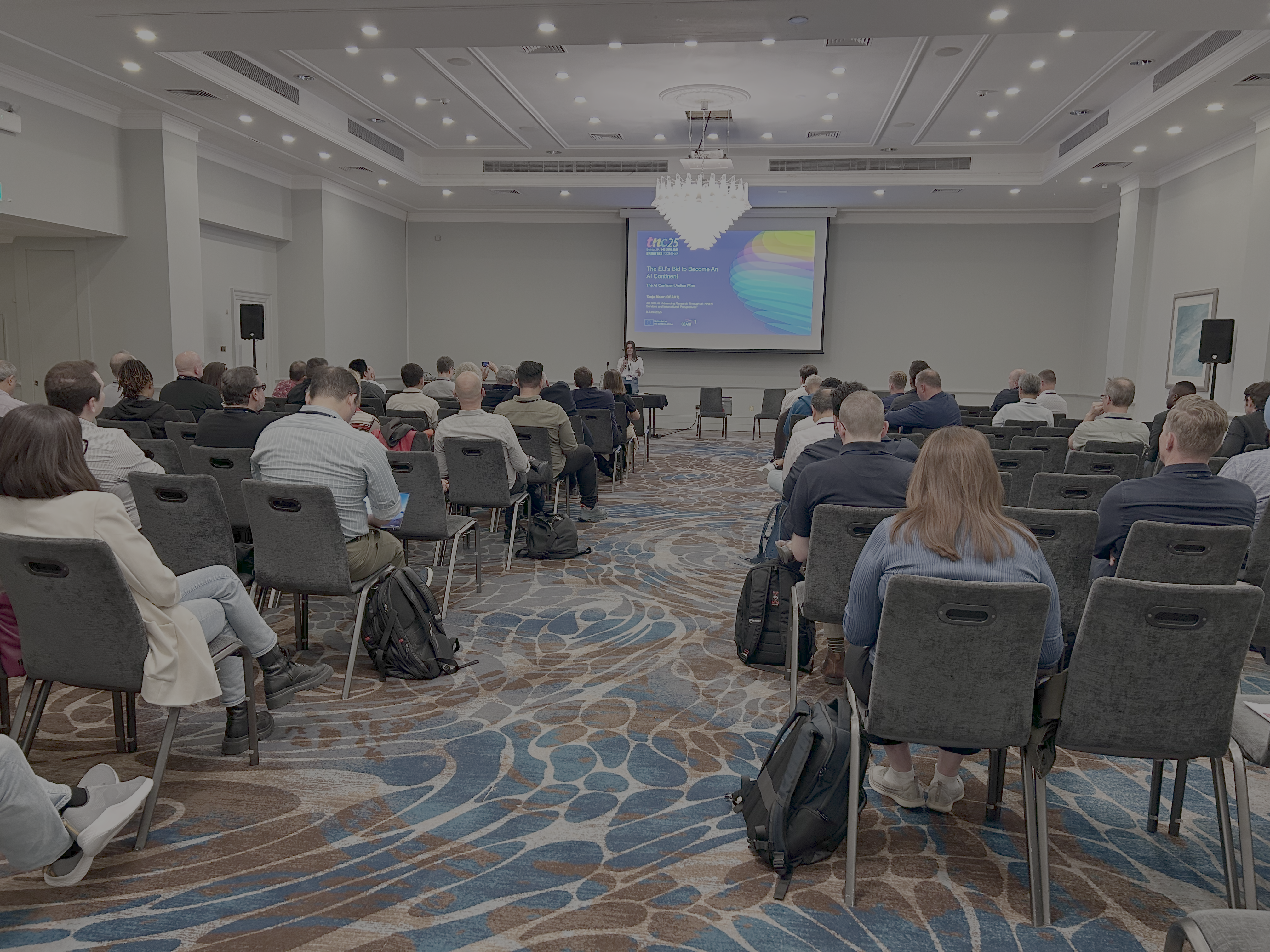
The meeting highlighted the pivotal role of NRENs in advancing AI infrastructure nationally and improving the support for researchers through cross border collaborations. In the first panel, Bartosz framed NRENs as the glue connecting AI efforts across regions, while Karl from Internet2 emphasized simplifying AI for researchers through regional initiatives. Iara shared Brazil’s national AI government plan and RNP’s focus on building an e-Science specialised network and supporting researchers with supercomputing resources, and Kennedy from Kenya discussed strategies to attract research, industry, and funding, particularly for AI in education and GPU clusters. Francis Lee raised concerns about responsible AI and the importance of training well the models to avoid bias, for example in ancient Asian languages. During the lightening talks, Chin presented a replicable model from a Data and AI workshop requirements gathering from researchers conducted by ESnet, Chris from AARNet showcased generative AI use in NOC/SOC operations and its challenges, Marcin from PCSS stressed the power of community coordination for AI pilots and joint LLM procurement, and Tanja highlighted Europe’s ambition to become the “AI Continent" and its opportunities for NRENs.
Main Takeaways
- NRENs are in a unique position to lead collaborative AI service development (and offering) across regions.
- National strategies on AI are driving changes on the NRENs services portfolio, from network to data and supercomputing services;
- There's a need to address cross-border challenges, especially in policy, data sharing, and global services.
- To democratize access, responsible AI must handle linguistic diversity within countries and the support for ancient languages;
- The importance of focusing on the AI user experience for researchers, to get the most value of the NRENs infrastructure;
- Shift the narrative from competition with commercial providers to cooperation, focusing on NRENs' unique value and niche;
- Reaffirmed the importance of building a trusted, ethical, and inclusive AI ecosystem, leveraging community strengths and shared infrastructure;
- To prevent AI from widening the digital divide, NRENs are key enablers on providing infra and equitable access;
Attendance
- 100+ people onsite
- 0 remote participants (since it was an in-person event)
Pictures
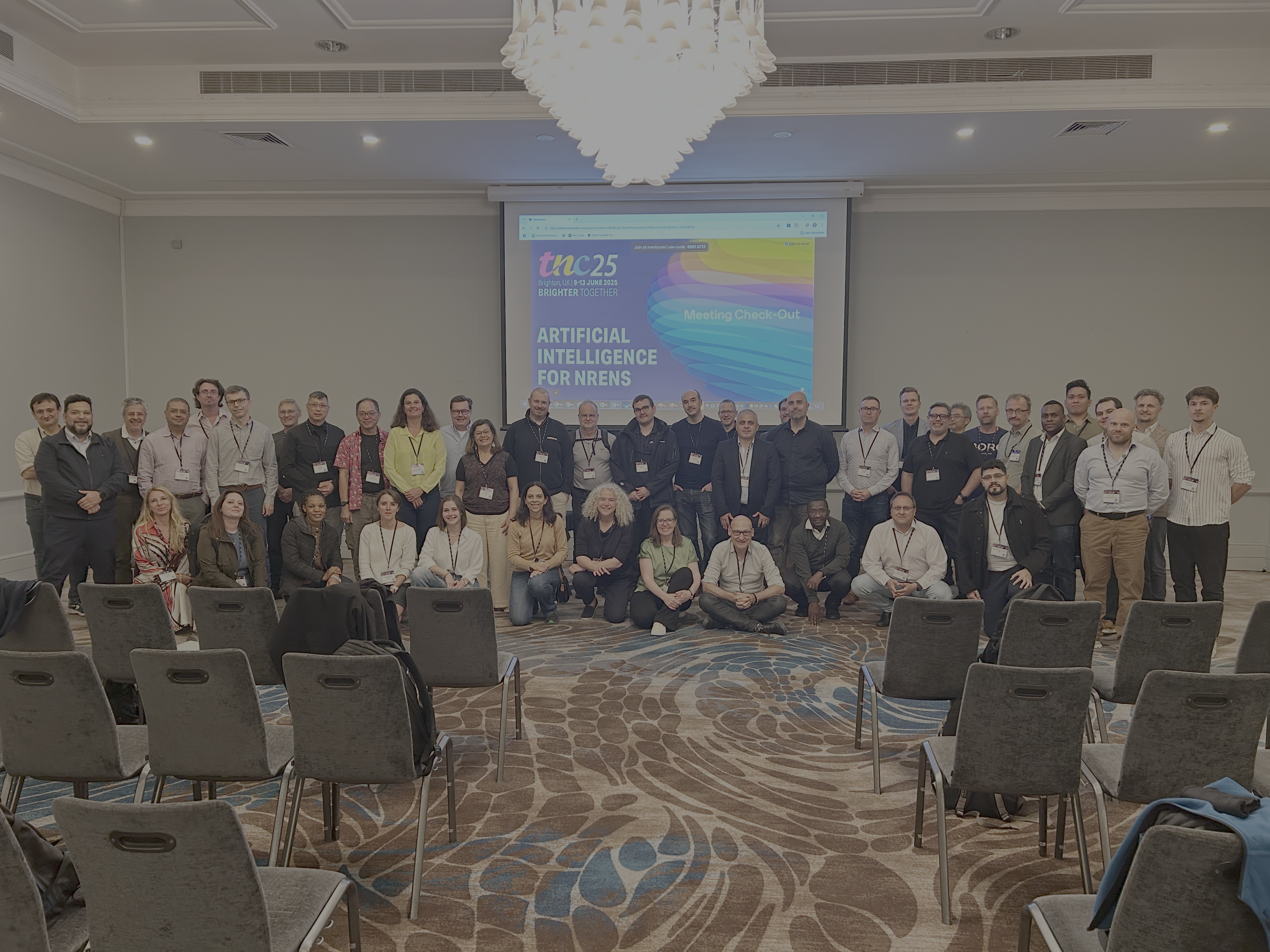
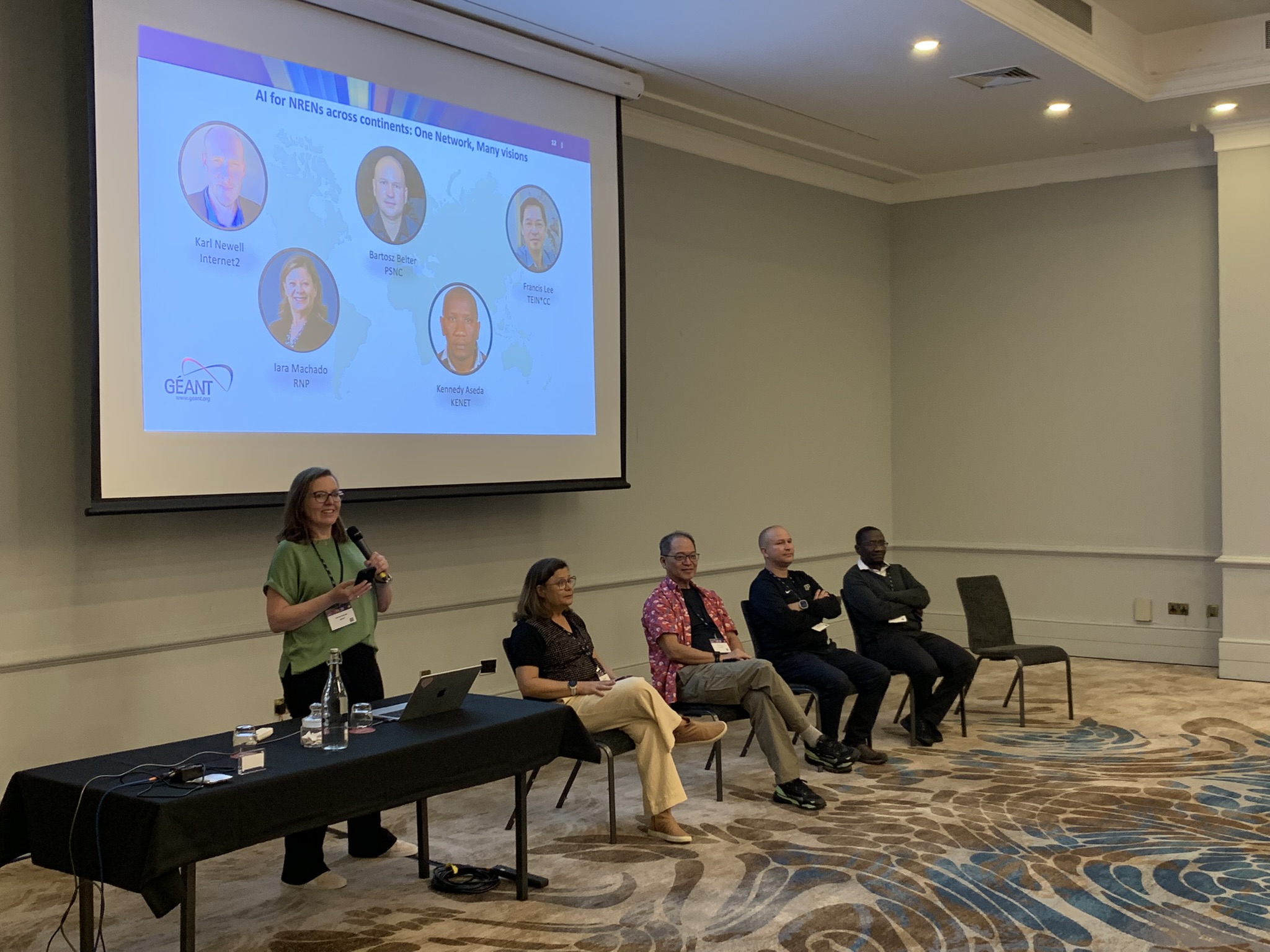
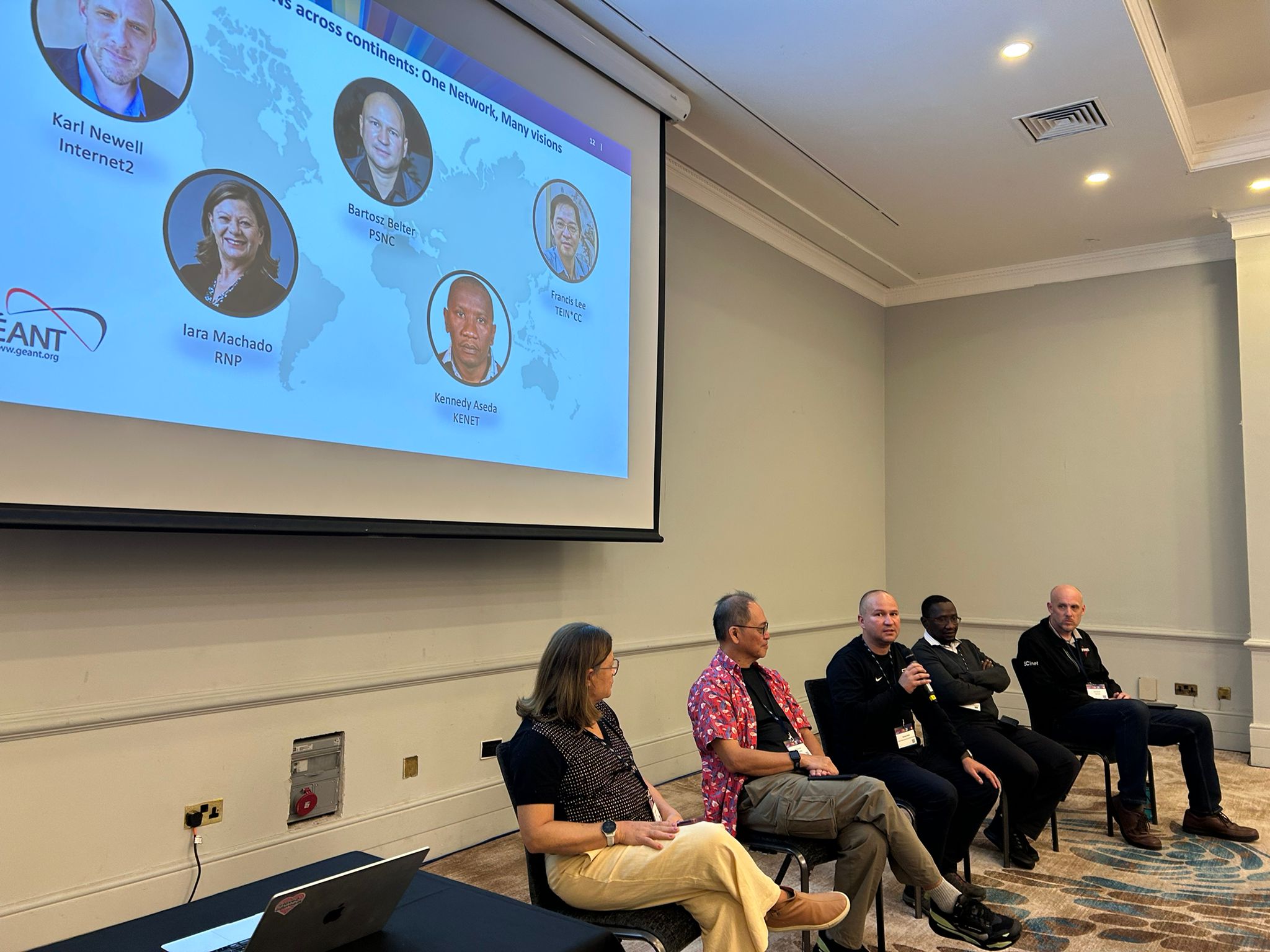

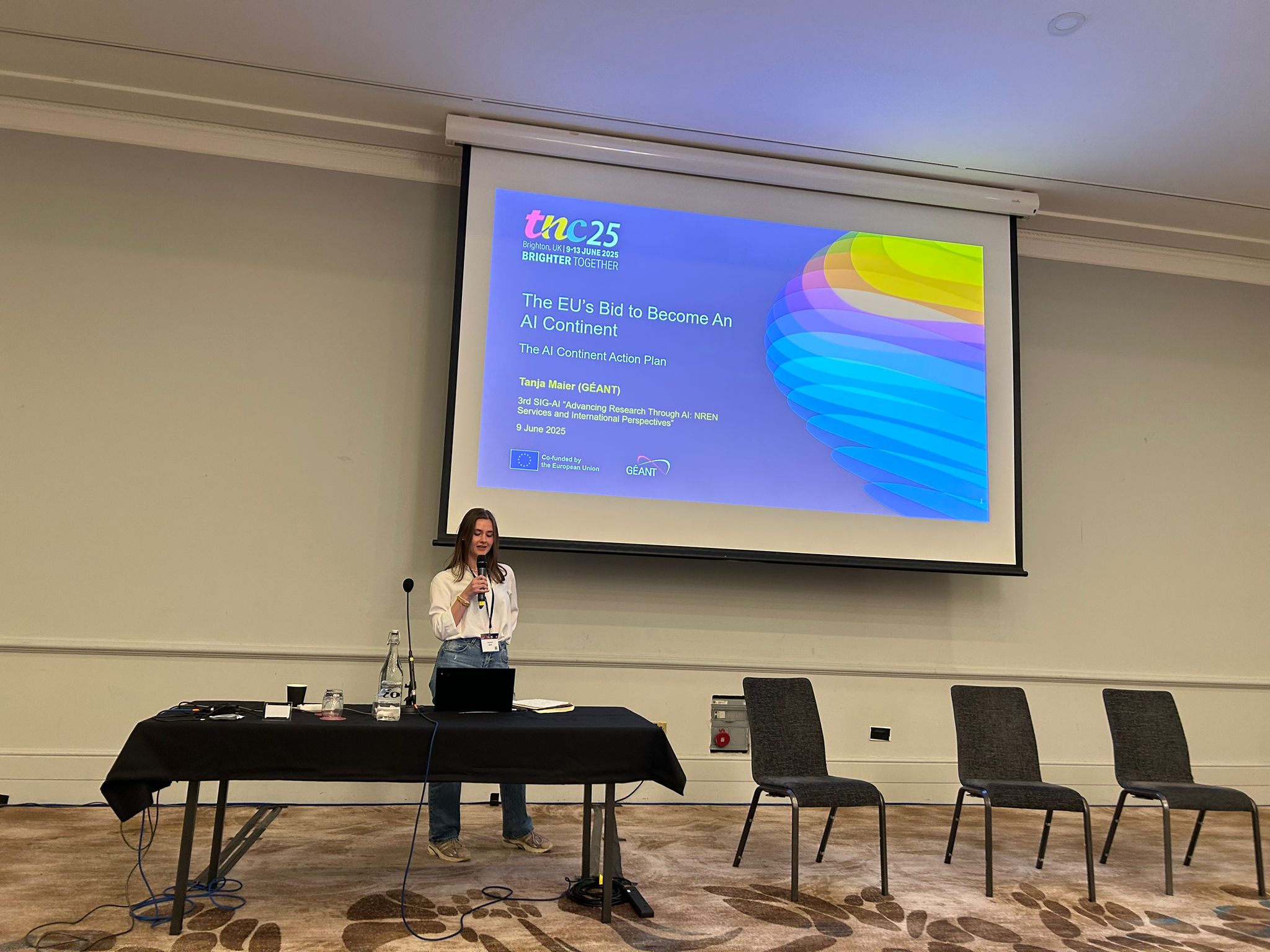

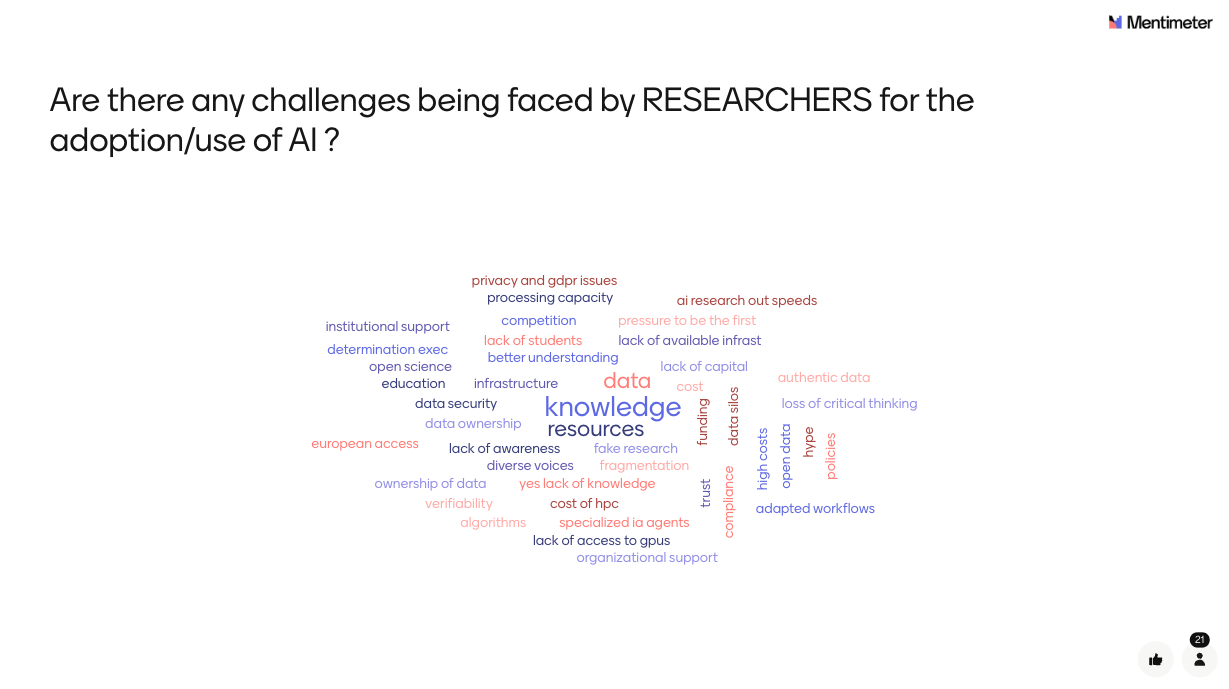
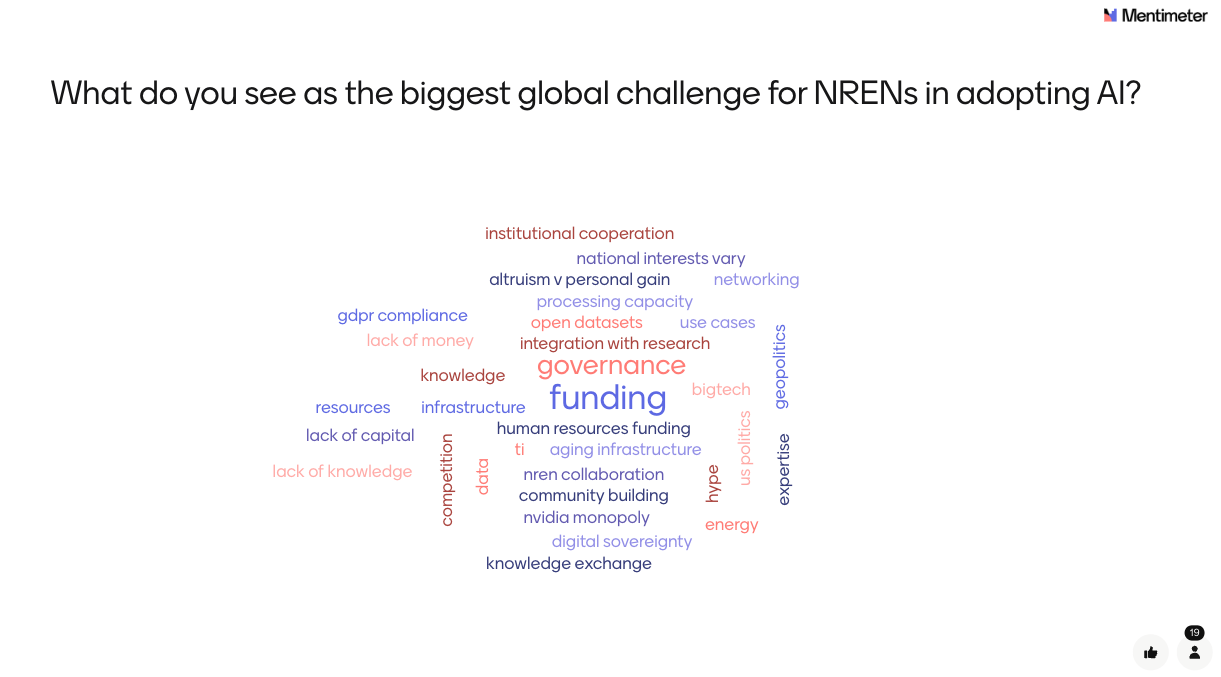
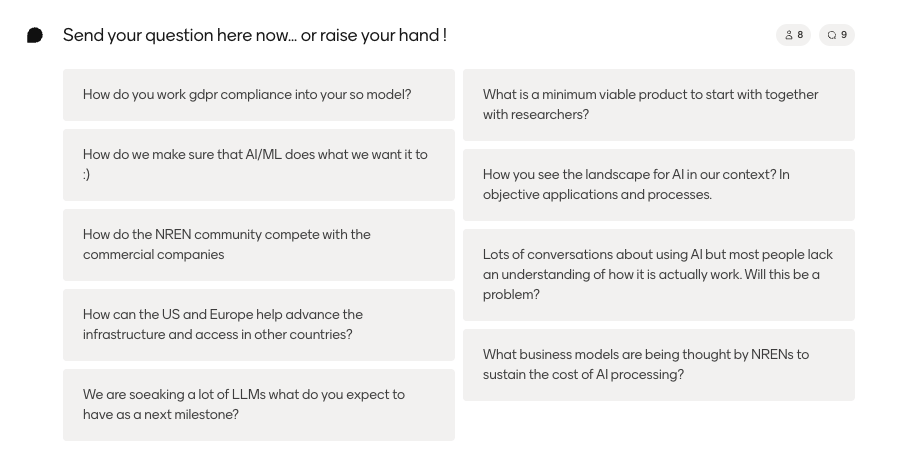
Mentimeter during the Panel Discussion
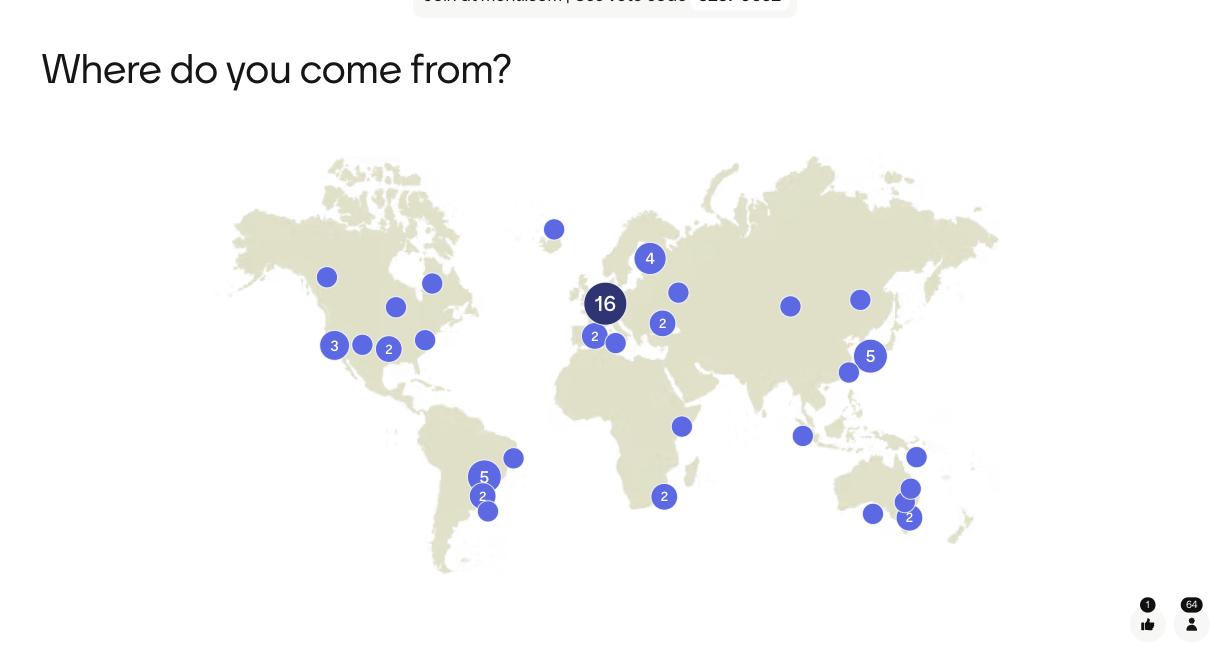
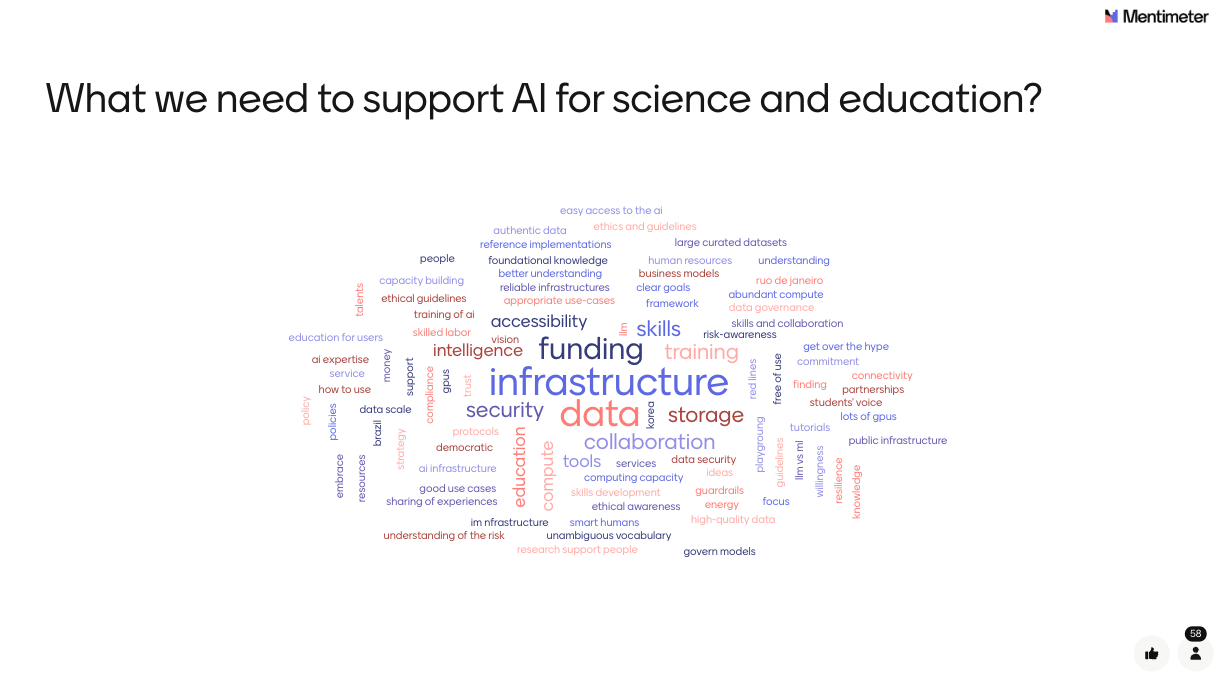
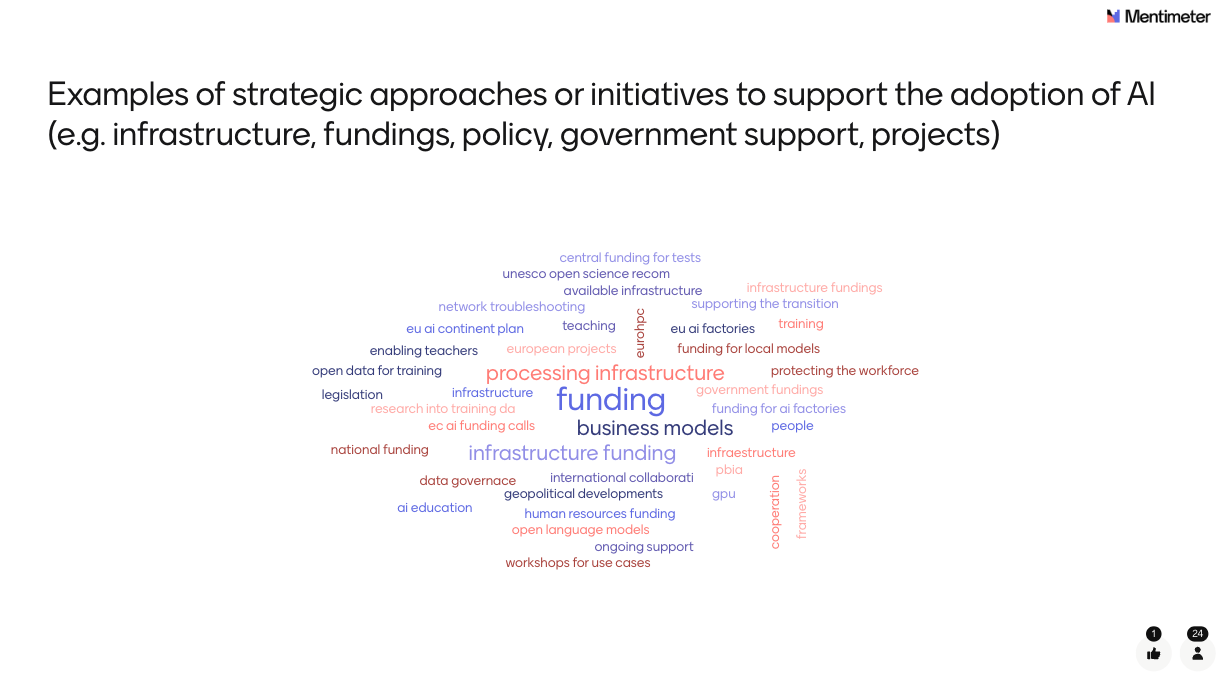
SWOT Exercise - Evaluation & Discussion
|
|---|
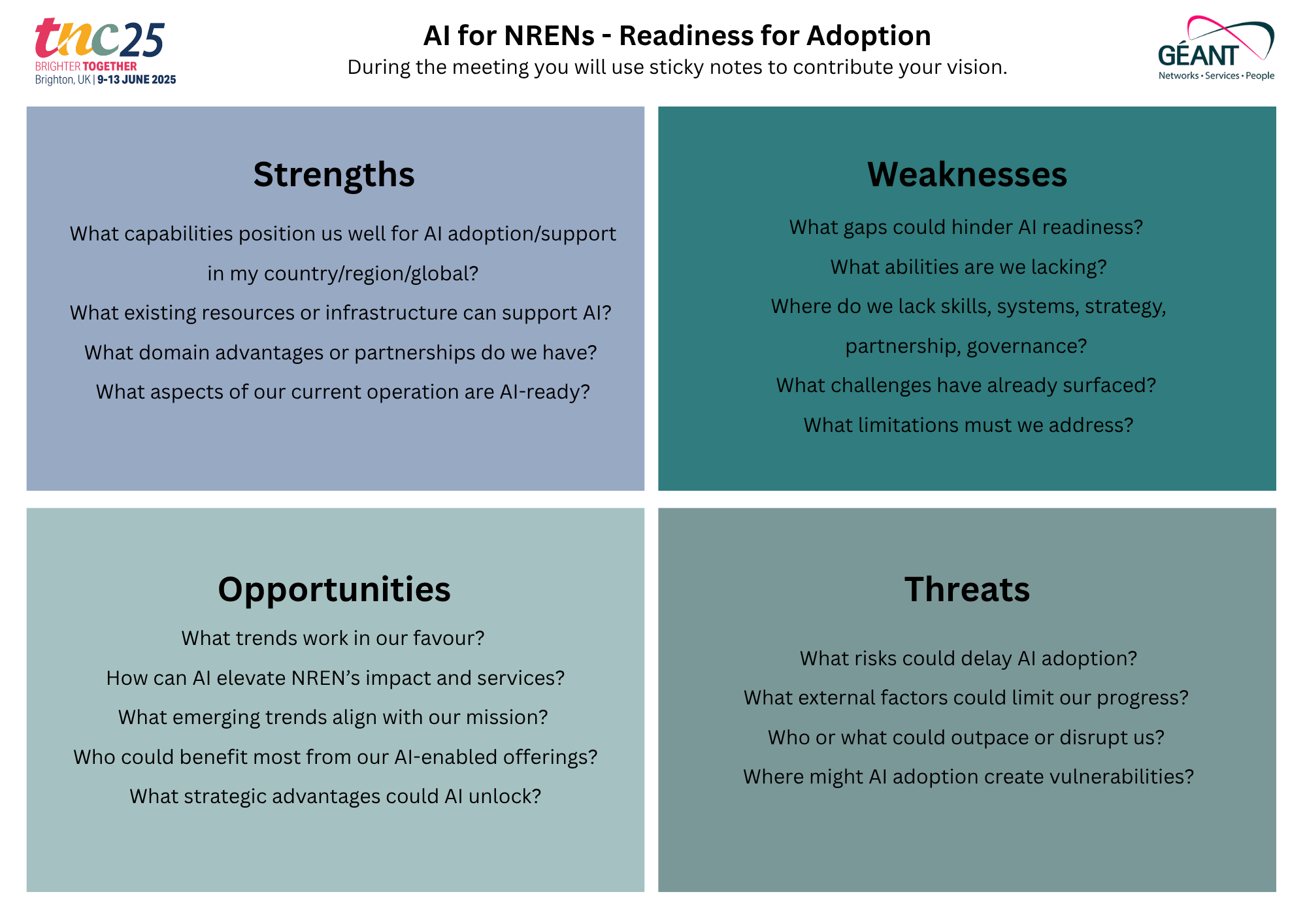
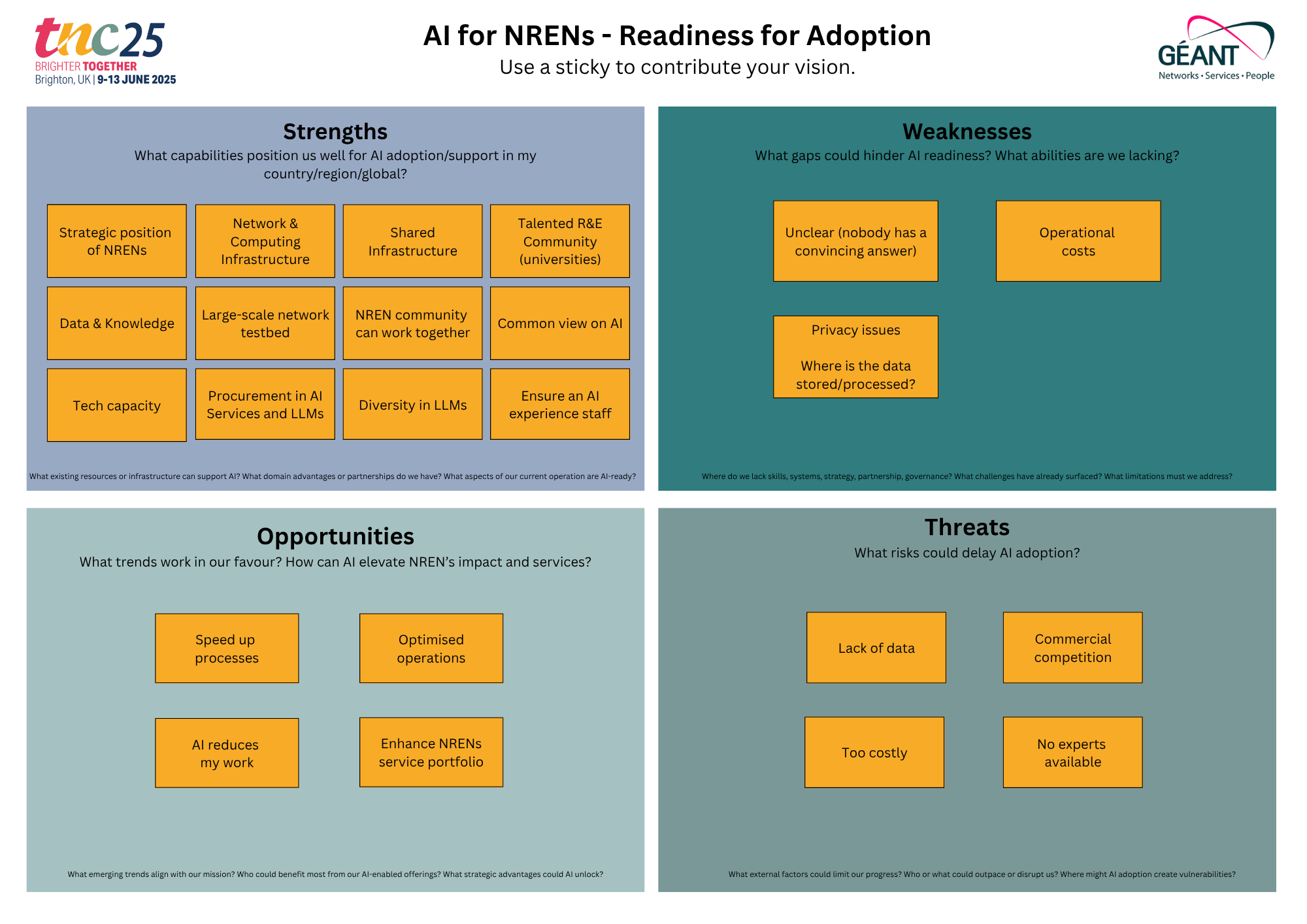
Strengths: What capabilities do NRENs already have that give us a strategic advantage in the AI era?
- Infrastructure & Technical Capacity
- High-speed, low-latency networks: Essential for large data transfer and distributed AI training.
- Ability to setup large-scale network testbeds
- Federated Identity Management (like eduGAIN): A foundation for secure, scalable AI access.
- Community & Collaboration
- Strong international and academic collaboration networks.
- Experienced IT staff (NRENs) and talented R&E community (Universtites)
- Vendor neutrality and trust from academic stakeholders.
- Data & Knowledge Assets
- Access to large academic/research datasets.
- Strategic Positioning
- Mission-driven (not commercial), which supports ethical AI development.
- Ability to launch procurement in AI services and LLMs
- Proven track record of scaling innovative technologies (e.g., cloud adoption, eduroam).
Weaknesses: What gaps could hinder AI readiness? What abilities are we lacking?
- Privacy issues: where is the data stored/processed
- Unclear: nobody has a convincing answer
- Operational costs
Opportunities: What trends work in our favour? How can AI elevate NRENs' impact and services?
- Speed up processes
- AI reduces my work
- Optimised operations
- Enhance NRENs' service portfolio
Opportunities: What risks could delay AI adoption?
- Lack of data
- Commercial competition
- Too costly
- No experts available